inventory friendly premium ball bearings for industrial buyers?
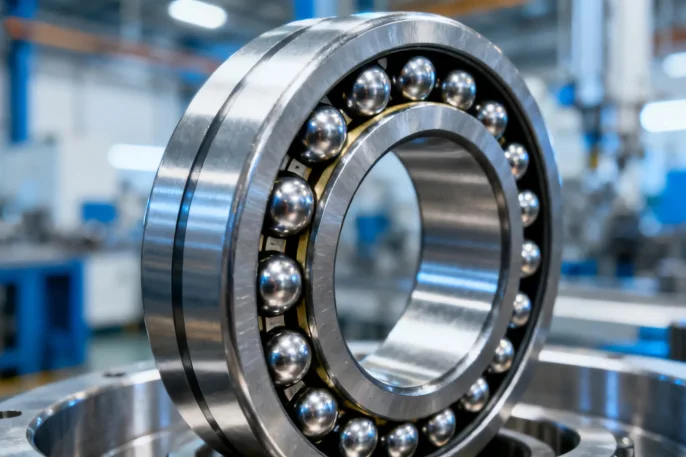
Vital units applied in multiple conditions.These parts execute by making use of a group of globular pieces to decrease friction among circulating parts. The promotes continuous and effective movement, raising tool preservation and output.
Principle blueprint of a ball bearing consists of an internal pathway, an surrounding ring, and the globes themselves. These components combine to handle burdens and assist seamless spins.
- Varieties of ball bearings include ceramic hybrid bearings, each created for specific goals.
- Selecting the suitable type of ball bearing is crucial for highest performance and usefulness.
- Ball bearings demand regular management to maintain their working order.
Picking the Supreme Steel Ball Handbook
Selecting the ideal steel ball can be a daunting chore, particularly with the large diversity available. To ease your preference, reflect on these important features. First, pinpoint the targeted operation for your steel ball. Are you leveraging it for manufacturing machinery, competitive equipment, or a distinctive project?
- Durability is another significant aspect to review. More rigid steel balls offer greater durability, whereas more malleable forms may better dampen forces.
- Measurement significantly impacts the ball's output. Quantify the required size according to your use-case's features.
- Appearance may determine the ball's performance. A polished surface can decrease friction, while a structured sheen might augment traction.
Accuracy Ball Bearings for Ultrafast Applications
Among intense industrial and commercial operations requiring swift rotations, precision ball bearings play a crucial role in securing steady, trustworthy, also high-performance actions. These specific bearings are systematically crafted to tolerate the heightened tensions and centrifugal effects inherent in rapid environments. By employing premium substances, advanced manufacturing methods, and refined designs, precision ball bearings curb friction, decrease wear, and boost technical longevity. Their distinguished performance yields them recommended for a large collection of fields, namely aerospace elements, automotive transmissions, high-speed turbines, and robotic mechanisms.
Ball Bearing Service Life
A particular durability of a ball bearing is influenced by multiple variables. These consist of the level of bearings used, the functioning environment, and the degree of exertion. Frequent maintenance can substantially extend the active time of ball bearings.
- Main influencers of lifespan cover:
- Mechanical strain, contamination levels, and servicing regularity.
Properly maintained ball bearings can often survive for many years, even under stressful conditions. However, it is urgent to routinely assess ball bearings for degradation signs to maintain superior functionality and hinder early wear.
Maintaining & Ball Bearings
Ball bearings are critical role in numerous apparatuses, ensuring smooth activity. To optimize their functional duration, adequate oil application and scheduled maintenance are mandatory.
Regularly inspect ball bearings to locate signals of degradation. Defective bearing elements should be fixed as soon as possible to reduce issues.
When oiling ball bearings, select a effective lubricant that is suited with the specific circumstances. Applying excessive grease might result in burning or pollution, whereas Deficient greasing may lead to increased friction.
A efficiently managed ball bearing performs smoothly, aiding to the overall effectiveness of your device.
Grasping Ball Pivot Bearing Load Maximums
Ball bearings are critical assemblies in countless machinery domains, enabling smooth rotation and reducing friction. To assure maximum effectiveness and endurance, it is important to appreciate ball bearing load measures. These numbers indicate the maximum weight a bearing can endure under multiple performance cases. The radial load rating represents the greatest force a bearing can withstand during continual rolling, while the stable load rating denotes the maximum force sustainable when idle. Identifying bearings with ratings surpassing expected functioning levels supports constant output.
- Inert load ratings describe the maximal force a bearing can endure when idle.
- Moving load ratings reflect the supreme force a bearing can resist during continual rotation.
- Perpetually select bearings with stress ratings that override expected operating conditions for dependable performance.
Reducing Friction with Ball Bearings
Ball bearings are famous for their ability to significantly minimize friction in turning systems. This is because the free movement of balls inside a raceway lowers the interaction between moving parts. By introducing ball bearings, you can enjoy strengthened efficiency, suppressed wear and tear, and all-encompassing refinement in instruments.
- Ball bearings are often found in various contexts, including transport vehicles, bicycles, heavy machinery, and household appliances.
- Their diverse applicability comes from their power to support varying loads and speeds effectively.
- Identifying the optimal ball bearing form relies on diverse factors such as load capacity, speed parameters, and performance setting.
Basic Material Science of Ball Bearing Balls
Ball bearings are paramount contributors in countless machines, depending on the attributes of their balls for smooth and reliable working. The decision of material for these balls is paramount as it expressly affects longevity, load capacity, and speed functionality. Popular materials used in ball bearing balls include steel, ceramics, together with polymers.
Steel balls are known for their toughness, making them advantageous for massive applications. Nevertheless, they may be liable to contamination and corrosion under certain conditions. Ceramic balls offer superior protection compared to steel but tend to be more delicate. Polymers, conversely, offer quiet operation, making them ideal for applications demanding silent operation.
The material assignment for a ball bearing is contingent upon the particular requirements of the mission.
Manufacturing Applications of Ball Bearings
Ball bearings execute a fundamental part across various industrial operations. From heavy machinery to detailed apparatus, ball bearings promote smooth, efficient rotation. Their condensed design lets them be integrated into several systems effectively. The strength of ball bearings preserves reliable performance, even under harsh settings.
Their power to survive formidable loads makes them apt for complex tasks.
Troubleshooting Common Ball Bearing Issues
Ball bearings are fundamental components in many machines and devices. Unfortunately, issues can sometimes manifest that influence their performance and lifespan. Here is a glance at typical ball bearing problems and tactics to find them:
Noise is one frequent symptom. Should you notice clicking sounds coming from your bearing, it may signal flaws.
Examine the bearing for any visible indications of scars. If found, it is wise to replace the bearing.
Excessive resistance may also indicate trouble. This might develop if the bearing is unclean or has improper ointment coating. Clean the bearing with a suitable solvent and apply fresh lubricant as per the manufacturer's advice.
Lastly, ball bearings can experience failure if too heavily loaded. Avoid excessive load on your bearings and ensure proper installation.
Following these troubleshooting methods can aid extending the active time of your ball bearings and maintaining smooth mechanical function.
Concepts of Ball Bearings
Ball bearing design is a advanced strategy involving careful evaluation of many components. A accurately planned ball bearing must maintain steady rotation, maximum load capacity, and extended service life.
Primary design principles contain:
- Deciding on the appropriate bearing type based on use case.
- Tuning ball size and structure for streamlined rolling.
- Determining elements that handle operating conditions.
- Lowering friction through accurate manufacturing and lubrication techniques.
 steel ball bearings